SAVE. DE Donate

Projects

Seven current projects across five risk domains. All follow the same method: map the gaps, connect the right people, deliver at the right moment.

Ongoing since 2024

Climate tipping points: from science to ministries, the Bundestag and the European Commission

Seven of nine planetary boundaries have been crossed (Planetary Health Check 2025). According to the Global Tipping Points Report 2025, warm-water coral reefs have already passed their thermal tipping point, and the authors cannot rule out that the Atlantic Meridional Overturning Circulation (AMOC) has passed its own. Once tipped, these systems are effectively irreversible on any timescale that matters for policy. Yet Europe still plans climate policy and adaptation for a climate that changes gradually. That is the gap we close.
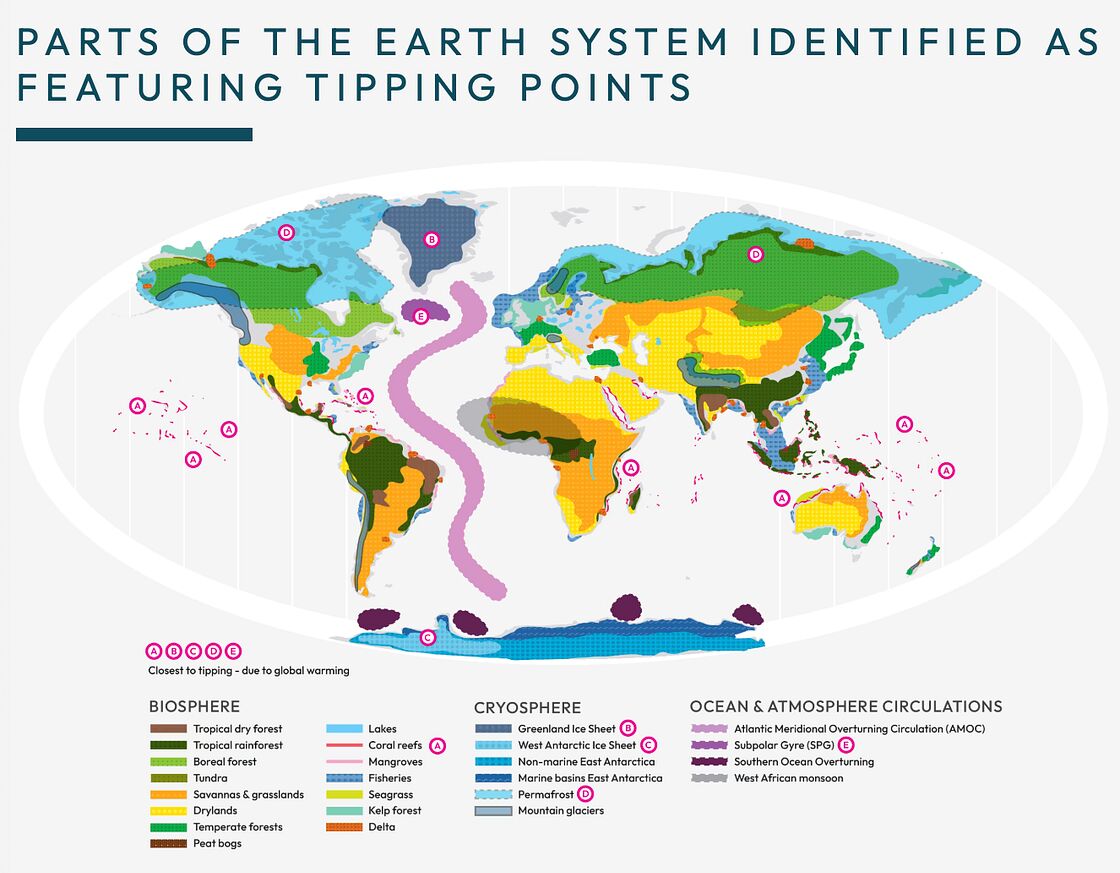
World map of the parts of the Earth system that feature tipping points
Tipping elements in the Earth system. Source: Global Tipping Points Report, University of Exeter.

German federal government

On SAVE’s initiative, tipping point researchers briefed staff from two federal ministries in a four-hour workshop on planetary and social tipping points in May 2025. When the new Global Tipping Points Report came out in October 2025, we went straight to the Federal Ministry for Economic Cooperation and Development: BMZ and GIZ then invited three of the report’s lead authors, in cooperation with SAVE, to brief more than 40 staff. BMZ subsequently planned a follow-up format.

Bundestag

One week after the report was published, the Bundestag held its first debate on climate tipping points, an Aktuelle Stunde (topical debate) with speakers from all democratic parliamentary groups. Together with many others, we had worked for a long time to put the issue on the parliamentary agenda.

European Commission

Meetings with EU Climate Commissioner Wopke Hoekstra in Brussels and at COP30 in Belém, including a six-hour working day at the Commission. For DG CLIMA and Cabinet Hoekstra we wrote a ten-page policy memorandum and executive brief covering six regulatory instruments, and handed around 100 concrete recommendations to DG CLIMA staff. This has grown into a continuing dialogue with the EU negotiating team.

UN climate negotiations

At COP30 we took part in side events on planetary and social tipping points. Afterwards we worked with Professor Tim Lenton and the COP30 Action Agenda team on turning the Global Tipping Points Report into policy programmes. At the June 2026 intersessional in Bonn (SB64), we argued in a meeting with the COP30 President for making the Global Ethical Stocktake operational rather than letting it end as a one-off document.

Positive tipping points

Together with climate journalist Toralf Staud, we bring evidence on positive tipping points in mobility, from Norway, Denver, France, Taiwan and China, to Germany’s Federal Environment Ministry.

What comes next

COP31 in Antalya (November 2026) and the EU legislative process on climate resilience. Together with Climate-KIC, Revive Earth and the European Environmental Bureau, we advocate for the uptake of the Global Tipping Points Report. With European partner organisations, we are also preparing a multi-year project to make adaptation in Europe tipping-point-proof.

Read more: How SAVE brought tipping point experts and politicians together.
Ongoing

SAVEadvise & connections: strategic advice and brokerage

We advise organisations and individuals on strategy, broker funding and open doors to decision-makers and partner organisations. Our foundation is our actor map: who holds which knowledge, which relationship, which mandate?

High-impact organisations we have already brokered funding for include nationaler-risiko-gipfel.de, MapOfChange.org and rightsroots.org.

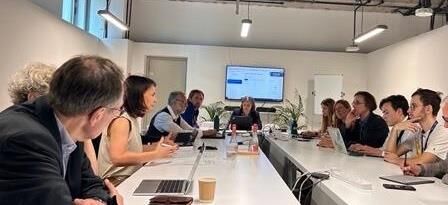
Advisory session around a long table
A SAVE advisory session

Behind the scenes, at our regular multi-day advisory sessions at the Ecosia office in Berlin, we have successfully advised the leadership of many influential organisations and connected them with people in power and with partner organisations:

  • PRÜF: afterwards, they achieved their goal of using the GFF study more effectively, and the Minister-Presidents of North Rhine-Westphalia and Baden-Württemberg backed their demands.
  • Nationaler Risikogipfel (National Risk Summit) by Scientists4Future: an event for members of the Bundestag, for which we secured Johan Rockström among the speakers. Thanks to SAVE, they also gained volunteers, media partners, allies and venues in Berlin.
  • Projekt 2045 e.V.: an association that brings together everyone with climate expertise in Germany’s Social Democratic Party (SPD) and shapes the party programme from within (projekt-2045.de).
  • World Youth for Climate Justice: awarded the Alternative Nobel Prize for their campaign for the International Court of Justice advisory opinion on climate change.

Individuals we have successfully advised include Sebastian Klein, Katja Diehl, Ruth von Heusinger, Maylis Roßberg, Luisa Neubauer and Jill Berger.

With SOFIA (Systemic Organisations Funding & Impact Advice Collaborative), we have also co-initiated a fund that channels flexible grants to high-impact civil society organisations.

Request advice: book a 10-minute call
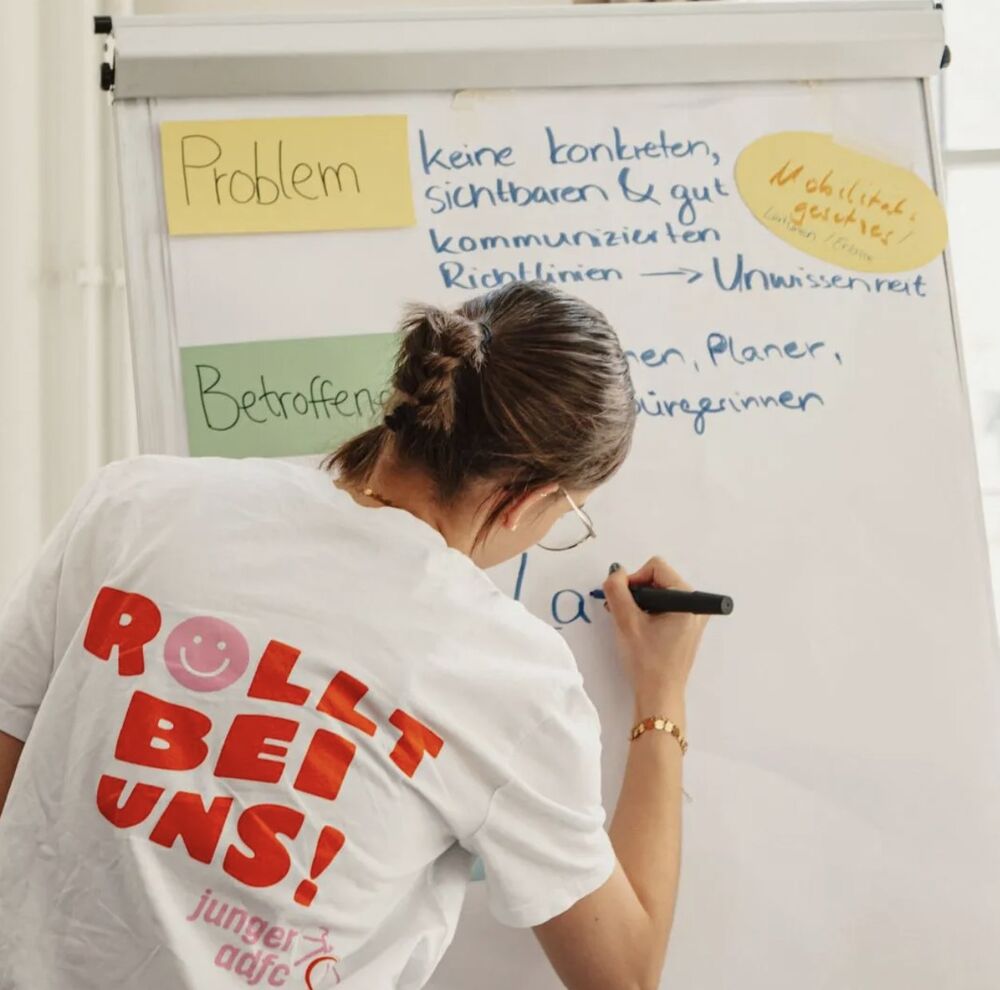
A participant writing on a flipchart during a workshop
From one of our advocacy trainings
Ongoing, available to book

Advocacy training: preparing the people who will be in the room

Much political impact happens through others: through the people who carry an argument into a room we will never enter ourselves. That is why we pass on what we have learned from more than 200 meetings with parliamentarians and EU officials as a skill others can use.

  • Advocacy trainings for the Global Youth Coalition (with the Smith School at the University of Oxford), Oxford Net Zero and ADFC, Germany’s national cycling federation, focused on reaching decision-makers during live policy windows.
  • “How to COP” briefings for first-time attendees of UN climate conferences, and persona briefings, for example for activists from the Most Affected People and Areas (MAPA) ahead of their meeting with Minister Robert Habeck at the German Pavilion.
  • Debate preparation for Maylis Roßberg, lead candidate of the European Free Alliance, for the televised Maastricht Debate (April 2024).
  • Meeting preparation, for example for Luisa Neubauer ahead of her meeting with MEP Peter Liese on the EU Emissions Trading System.
Request a training
In development, seeking funding

AI governance: keeping power over AI in Europe democratically accountable

Much of the research on AI-enabled concentration of power focuses on the United States. The EU is one of the few democratic jurisdictions that combines regulatory reach with an active industrial policy on compute, and many of the relevant decisions are being made now. The officials making them rarely meet the researchers who study how advanced AI could concentrate power. Going beyond the AI Act, we work on four levers:

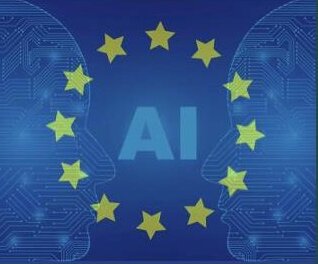
Illustration: AI and the EU stars
  • Compute: where Europe’s AI infrastructure is built and who controls it (Chips Act 2.0, Cloud and AI Development Act).
  • Oversight of AI in government and security: control and chains of command when AI is used in public administration, security agencies and defence.
  • Political economy: how the value created by frontier AI is captured and distributed before a handful of firms hold most of it.
  • Protecting democracy: non-partisan safeguards against AI-enabled mass manipulation and surveillance, including in the enforcement of the Digital Services Act and the Digital Markets Act.

To this end, we develop concrete model provisions with domain experts, bring them to the right desks at the right time through closed-door roundtables in Brussels and Berlin, and maintain an open map of the relationships between policymakers and the AI industry. Our starting point is our paper on an EU AI Safety Settlement with twelve legislative demands. All outputs will be publicly available.

Fund this project
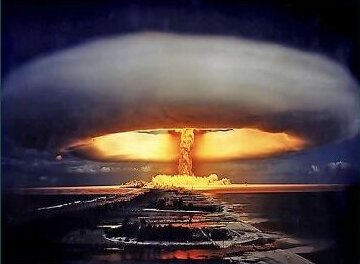
Mushroom cloud from a historical nuclear test
Ongoing, seeking funding

Nuclear weapons policy in Europe: ready before the window opens

In late 2025, we mapped the European nuclear weapons policy space and found a specific gap: careful, critical research on deterrence and escalation is not reaching a debate that is hardening fast. Nuclear deterrence is regaining legitimacy in Western capitals, and its risks are named less and less.

This led to a roundtable of scholars and practitioners from the UK, Germany and France, which we co-organise. It met in July and September 2026 under the Chatham House Rule and now convenes every six to eight weeks. Its focus is on so-called wildcards: plausible events that would suddenly open up the debate, such as a resumption of nuclear testing. Such windows are short, and rigorous analysis cannot be written in a few hours. The group therefore thinks scenarios through in advance and works out which connections, messengers and outlets are needed to reach decision-makers in time. Along the way, we link the nuclear debate to democracy, the climate crisis and planetary boundaries.

The next milestone is the first Review Conference of the Treaty on the Prohibition of Nuclear Weapons in New York (30 November to 4 December 2026). Funding would allow us to pay organisers, map decision-makers and narratives, and turn the wildcard discussions into policy briefs.

Fund this project
Seeking funding

EU Climate and Energy Expert Delegation to China 2027

Europe lacks first-hand knowledge of China’s clean-tech deployment and decarbonisation strategy. In March 2027, 15 to 20 European climate policy and clean energy experts will travel to China for a two-week exchange with policymakers, industry leaders, research institutes and academics.

15 to 20climate policy and clean energy experts
2 weeks20 March to 3 April 2027
BeijingConfirmed: Peking and Tsinghua University, think tanks, clean energy companies
€62,000funding sought

Europe’s green transition depends on Chinese battery, EV and critical raw material supply chains, while China’s clean-tech export boom depends on other countries’ green-tech uptake. Europe in turn holds policy experience China seeks, from carbon footprinting and nature protection to chemicals regulation and power grid flexibility. Yet EU institutions and civil society lack first-hand China expertise. While the political level is under strain, from CBAM to EU tariffs on electric vehicles, technical cooperation endures: the EU has supported China’s emissions trading system for nearly two decades.

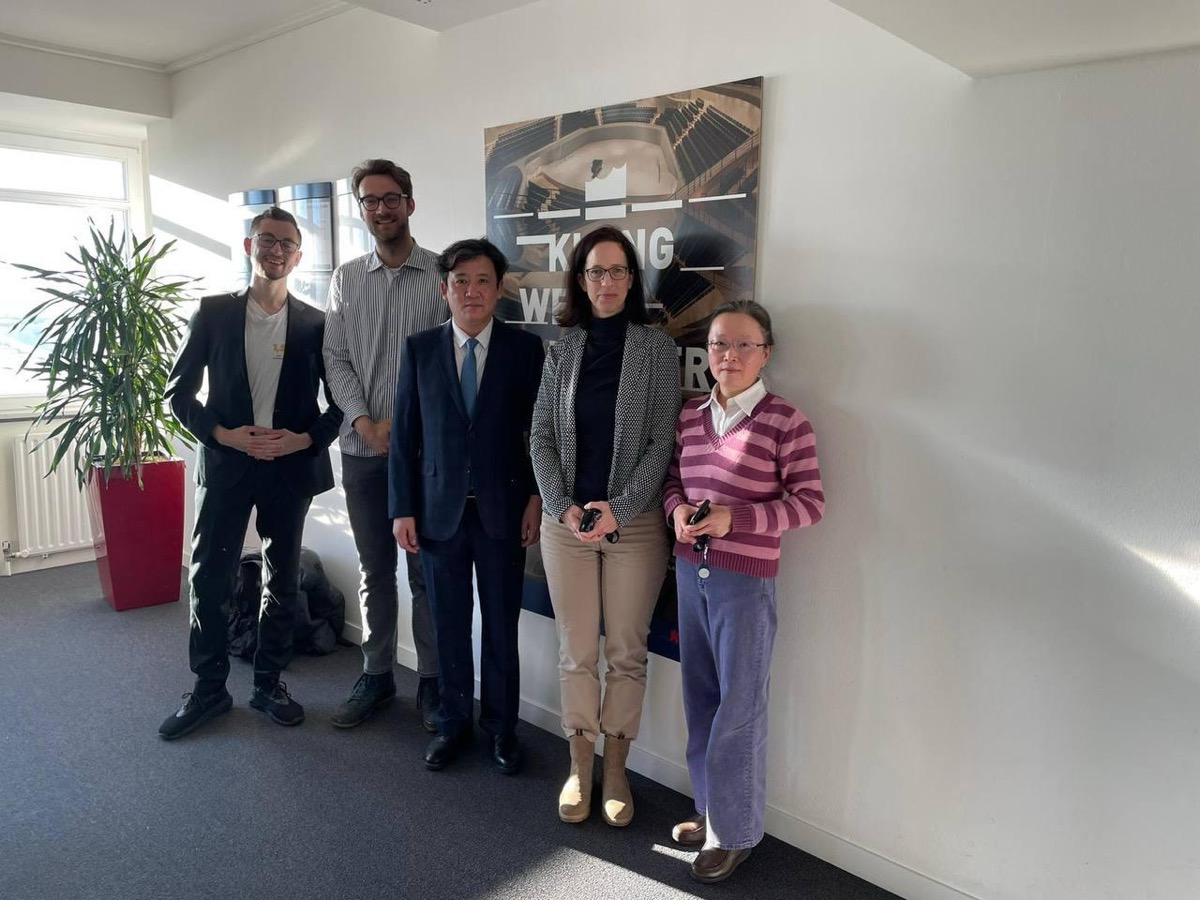
Five people standing side by side in a bright office
Before the delegation: we connected the CEO of a Chinese heat pump manufacturer with Agora Energiewende, GreenTech Festival and the City of Hamburg, and presented publicly available best practice at a heat pump congress in China.

Topics

Carbon markets and CBAM, mobility, land use, methane, critical raw materials and supply chains, grid flexibility and renewables integration, clean-tech manufacturing and trade, and crisis management.

Outputs

  • An open-access report in English and German.
  • Two closed-door debriefs in Brussels and Berlin with officials from EU institutions and national ministries of several member states.
  • An alumni network for continued exchange. The delegation is planned as an annual programme.

Organisation and independence

The delegation is organised by emerging leaders in the climate and energy sector together with SAVE and the German-Chinese Friendship Association (Gesellschaft für Deutsch-Chinesische Verständigung, GDCV). SAVE holds the funds in a ring-fenced account with external bookkeeping and issues German tax receipts. No party reviews the report before publication.

How you can support it

Foundations can sponsor one participant from €4,000, two participants who would otherwise be missing from the room from €7,500, or join as programme partner (€10,000) or lead funder (€25,000). European companies can send staff members or contribute in kind. Two things we will not do: sell an endorsement, or let anyone call this a climate-neutral activity.

Support the delegation
Ongoing since October 2026

Making German climate finance visible: with IKI and ZUG

The German government’s International Climate Initiative (IKI) funds climate and biodiversity projects worldwide. Its results are well documented, yet they barely reach the German public. Without public backing, international climate finance becomes an easy target in every budget debate.

SAVE brought the IKI team and ZUG, the organisation that implements IKI, into the same room with Indigenous partners and with people who financially support Indigenous communities in Brazil. We also advise IKI and ZUG on their social media strategy: which trusted voices, from sustainability creators to the people in the projects themselves, reach audiences a ministry cannot reach on its own?

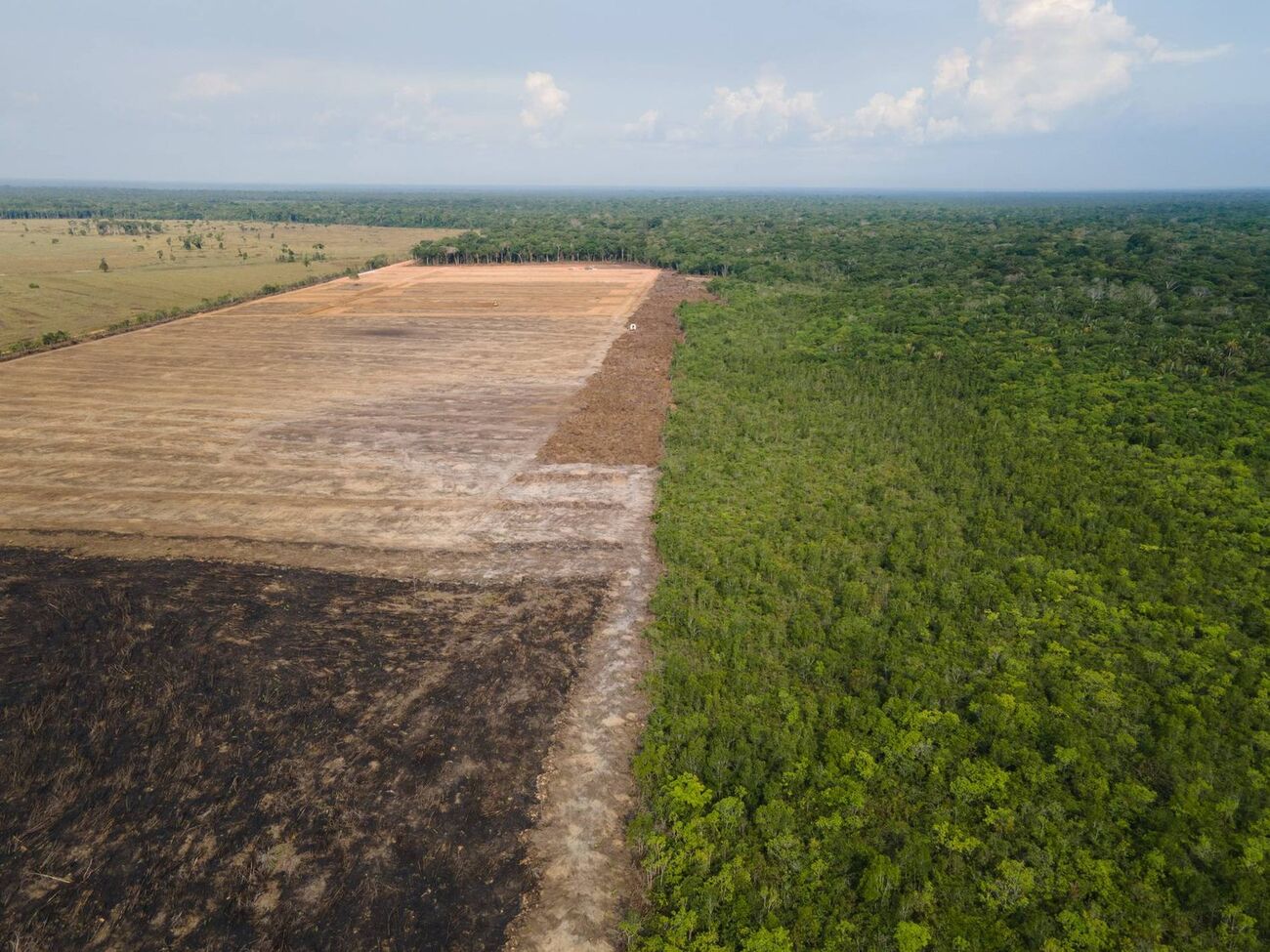
The timing is right: according to INPE, deforestation in the Brazilian Amazon fell by around half between 2022 and 2025, and IKI-funded projects protecting Indigenous territories are part of that story.

Aerial view of cleared land next to intact rainforest
Rainforest and cleared land in the Amazon region

Further topics

  • Platform regulation: a German civil society demand paper on enforcing the Digital Services Act and the Digital Markets Act, focused on fine levels, taxation and reporting duties for large platform companies.
  • Positive tipping points in mobility: evidence from countries and cities where the shift has already tipped, for Germany’s Federal Environment Ministry.
  • Wendepunkt JETZT!: a campaign to anchor climate adaptation and the precautionary principle in the German Basic Law.
  • SAVE Impact Weekends: multi-day gatherings at the Ecosia office in Berlin where organisations work together on strategy and funding.

Past projects

UN climate conferences COP26 to COP30

We empowered international changemakers on the ground: with back-office infrastructure for coordination among participating organisations, with analyses such as the Global Tipping Points Report for civil society organisations, with “How to COP” briefings for newcomers, and with persona briefings and advocacy trainings, for example for the Global Youth Coalition. Our founder has attended every UN climate conference since COP26.

European Green Deal and the 2024 European elections

Ahead of the 2024 European elections, we produced a climate briefing package covering the five largest member states (Germany, France, Italy, Spain and Poland) for NGOs, campaigners and candidates, prepared a lead candidate for the televised Maastricht Debate, and helped prepare meetings on the EU Emissions Trading System.

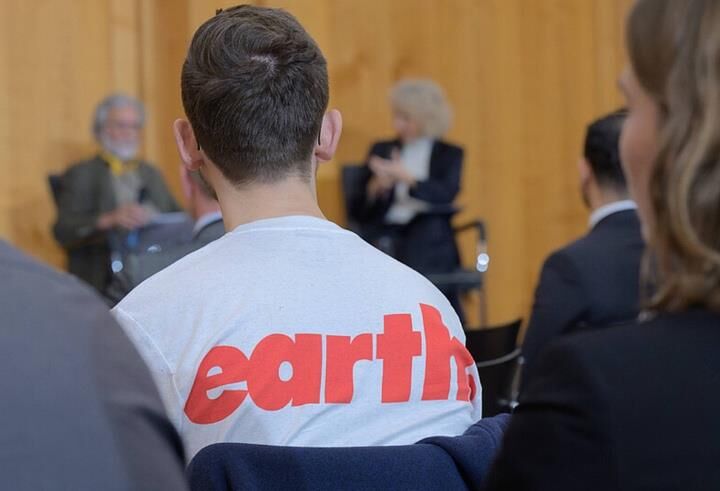
Audience member wearing a shirt that reads earth at a conference
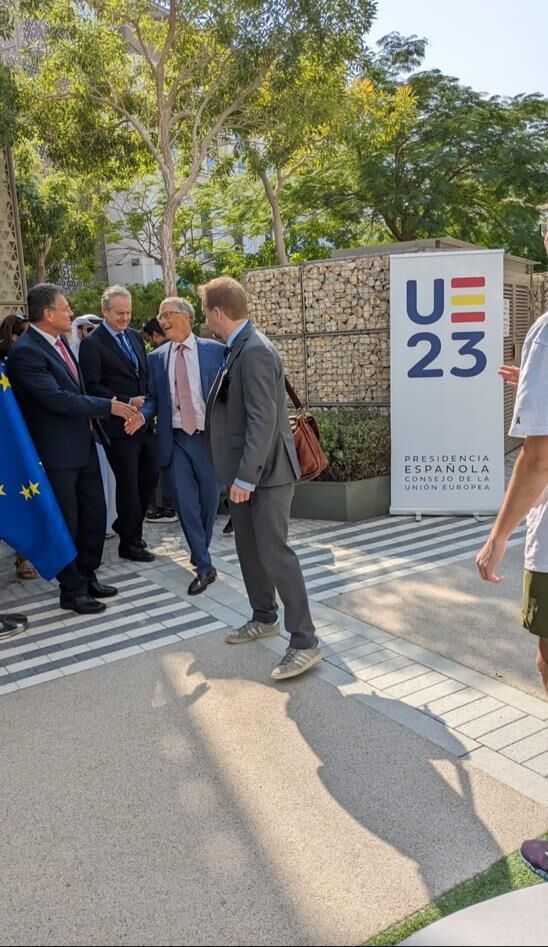
Delegates on their way to a meeting at a UN climate conference

Make the next conversation possible.

Every donation pays for preparation, travel to negotiations and the time that good connections take. Donors in Germany receive a tax receipt.